
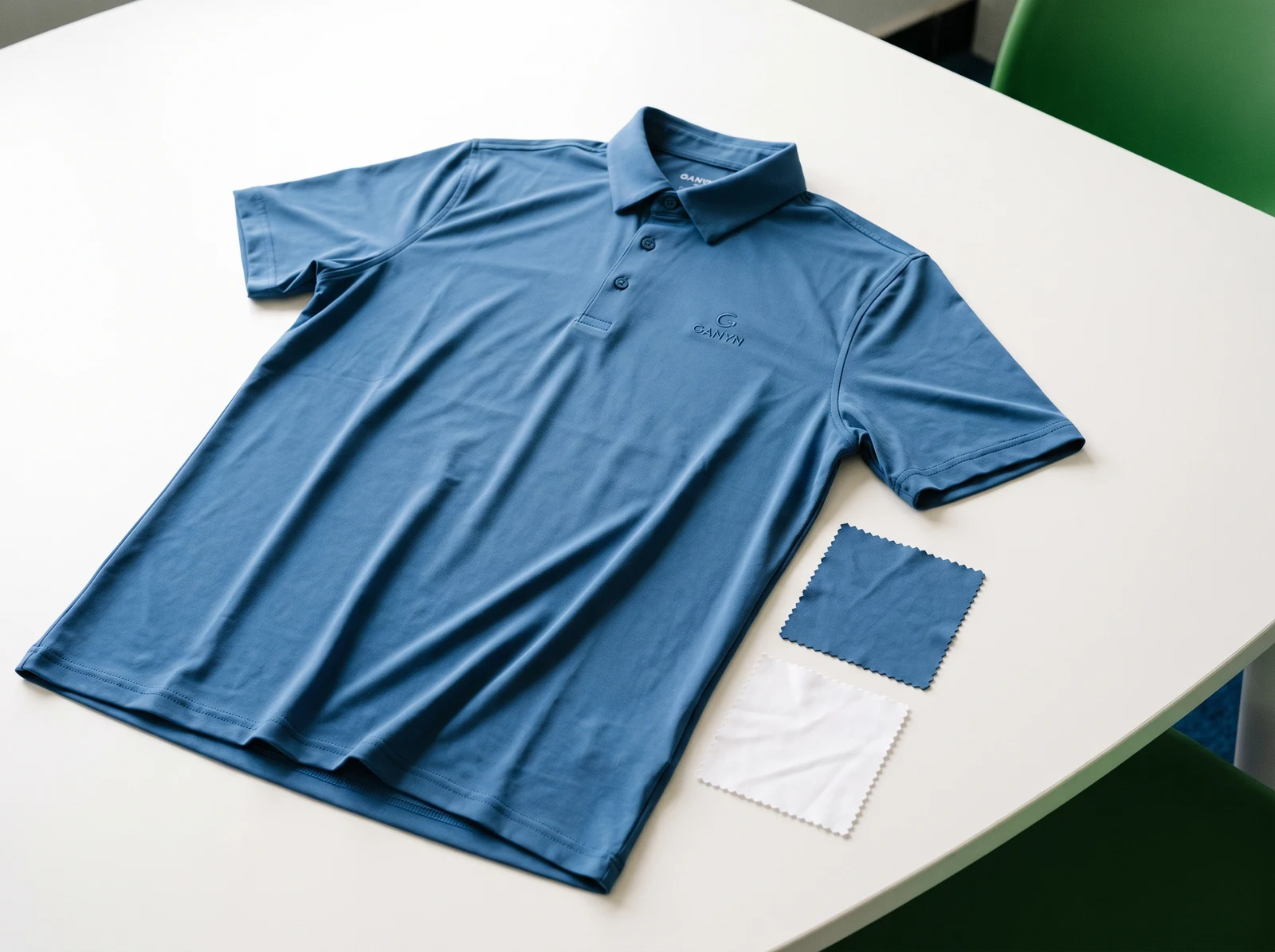
Polyester / elastane is the fabric composition Ganyn clients most often choose for golf apparel. It is a useful first comparison for stretch performance polos, but nylon, cotton and other blends can be better suited to a different handfeel or product direction. There is no single fiber that is best for every golfer or every collection.
Polyester / elastane: a versatile performance starting point
Polyester has low moisture absorption at the fiber level. Elastane, also called spandex, contributes stretch and recovery. The blend is worth considering for swing movement and a closer silhouette. Smooth jersey is a useful print base; fine pique offers a textured solid-color option.
Specify the blend ratio, weight and stretch direction. Wicking and quick drying still need assessment on the finished material. More elastane does not automatically mean better comfort or four-way stretch, and print temperatures must be compatible with the selected blend.
Polyester: consider the knit as well as the fiber
An all-polyester knit can be a practical option for team apparel and print-led ranges. Mechanical stretch from construction or textured yarns can provide movement without elastane. Compare it against the required fit instead of assuming that all-polyester fabric has no stretch.
Review drape, touch, pilling and moisture transport. For conventional sublimation, confirm a compatible base, color and process through a print trial.
Nylon / elastane: start with a softer-touch brief
Nylon, also called polyamide, is often selected for a smooth handfeel. With elastane, it can suit fitted solid-color polos, golf dresses and stretch layers. Yarn and finishing control how matte, silky or glossy the actual fabric appears.
Nylon absorbs more moisture than polyester at the fiber level, but garment drying depends on the full construction and finish. Review pilling, care and color performance. Do not transfer a polyester sublimation specification directly to nylon.
Cotton and its blends: traditional feel with different tradeoffs
Cotton offers absorbency and a familiar natural-fiber touch for classic club polos and lifestyle apparel. Untreated cotton can retain moisture; review its drying behavior for active use, together with shrinkage and dimensional stability.
Cotton / polyester can balance cotton-like touch with practical care, depending on the ratio and finish. Cotton / elastane adds stretch and recovery to a cotton-rich design, but it does not by itself make the material quick-drying. Approve the actual knit and care results for either blend.
Compare swatches against one product brief
Ask for alternatives against the same intended wearer, fit, color, climate and artwork. Assess handfeel, drape, opacity, stretch and care on the actual swatches, then review a finished sample. Do not infer fiber content from a photograph or advertise measured performance without evidence.
View constructions and composition comparisons.
How are moisture-wicking requirements checked?
For custom moisture wicking golf shirts, ask how the actual fabric transports moisture and dries under the agreed conditions. Polyester absorbs relatively little moisture at the fiber level, but yarn, construction and finishing affect the fabric's behavior. Added elastane supports stretch; it does not prove moisture management.
Confirm the test method, target result and any required washing or conditioning. Review the fabric swatch and finished garment alongside applicable evidence before making a performance claim.
Compare golf apparel fabrics and performance requirements.
Discuss your manufacturing project