Ganyn Apparel
Fabrics & performance for golf apparel.
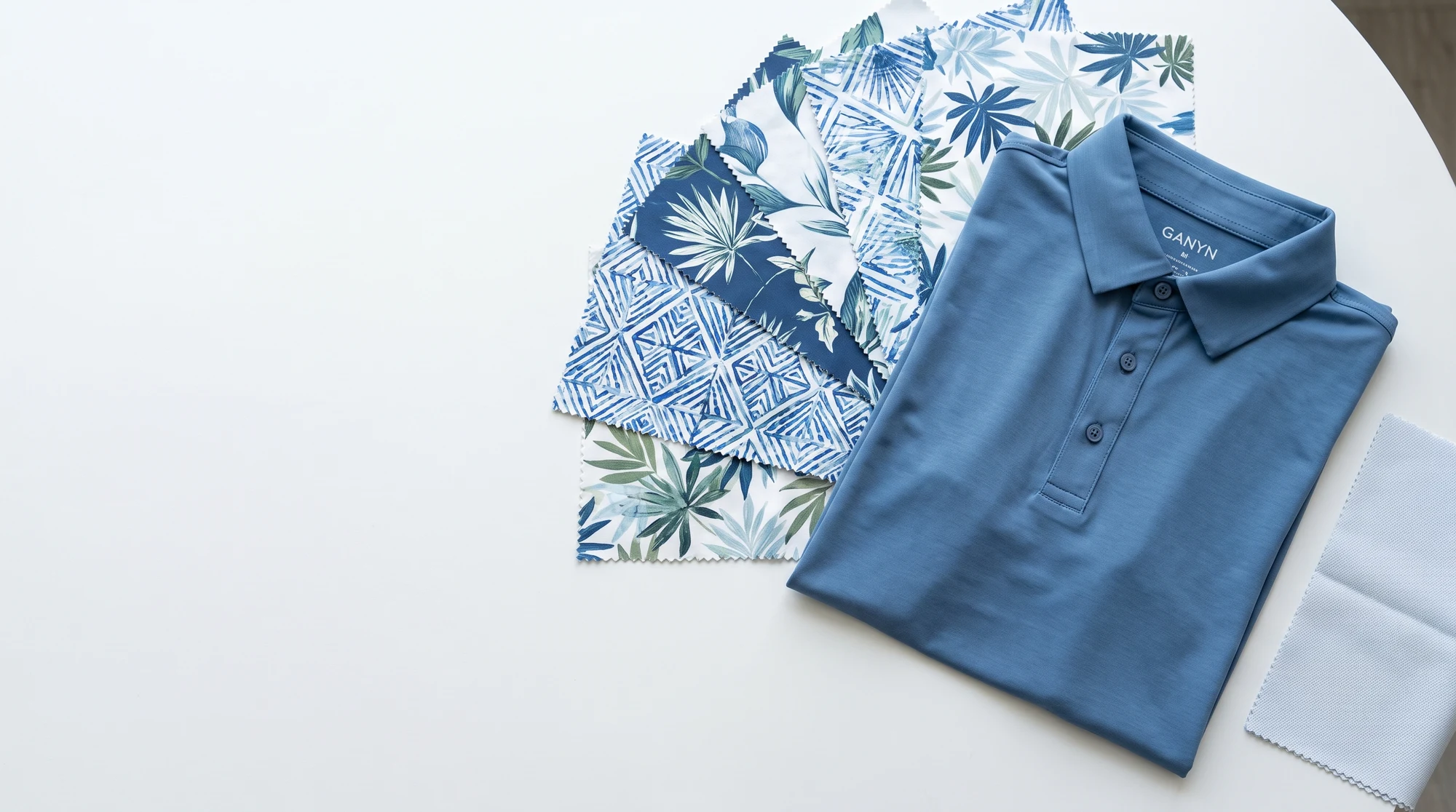
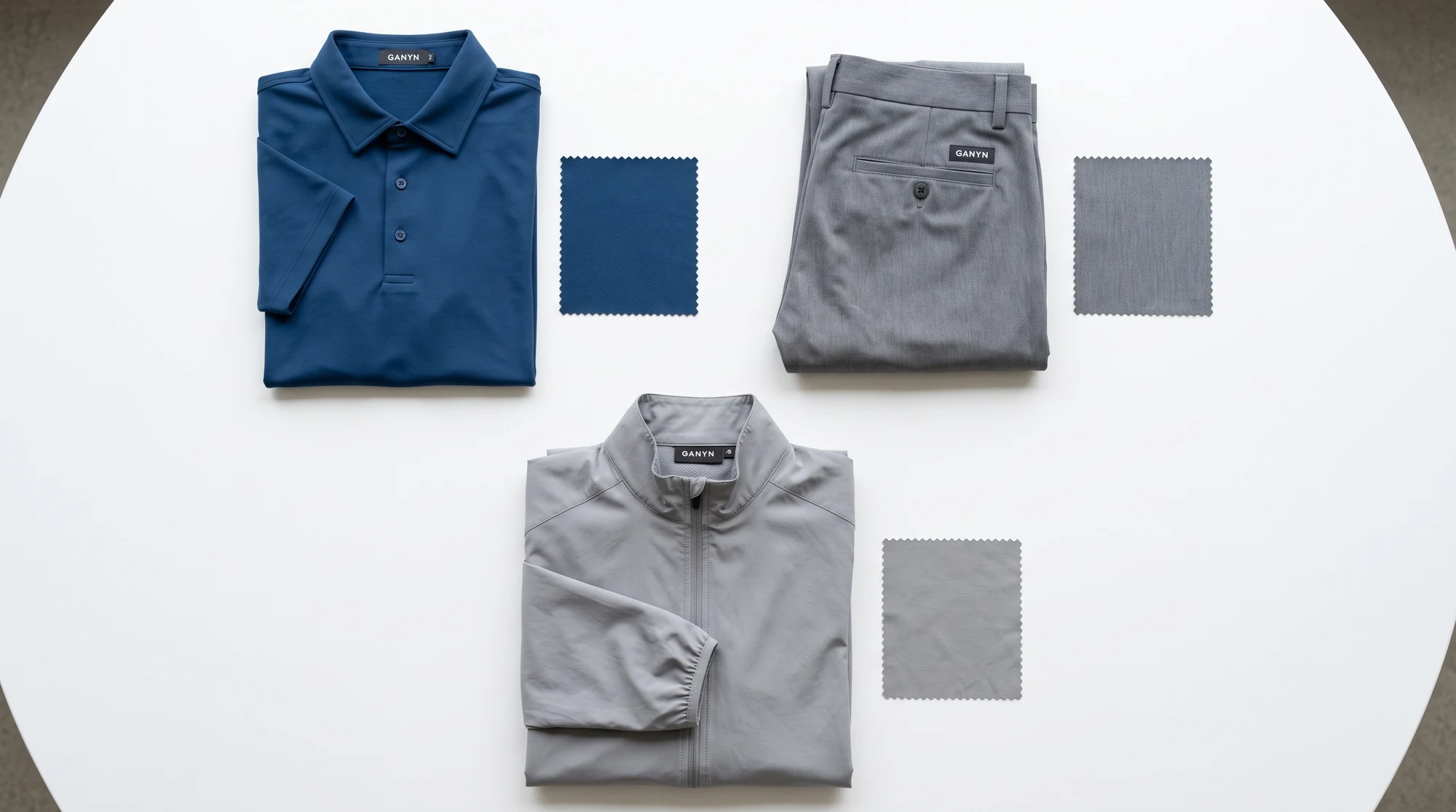
Compare knit fabrics for polos and layers, stretch wovens for trousers and shorts, and protective materials for outerwear. Choose the structure, fiber blend and functional requirements around your golf apparel brief.
- MOQ
- From 50 pieces / style & color
- Sampling
- Typically 3–15 days
- Bulk production
- Typically 7–20 days after sample approval and material readiness
- Quality
- Two full inspections per garment
Materials for the whole golf apparel collection.
We develop knit and woven golf apparel: polos, dresses and layers, trousers and shorts, and outerwear. Start with the garment and intended conditions, then select its construction, composition and finish.
Knit fabrics for polos, dresses and layers.
Pique, plain single jersey and jacquard describe how the fabric is knitted, not what it is made from. Choose the surface and drape first, then compare fiber composition, weight, stretch and finishing for your product.
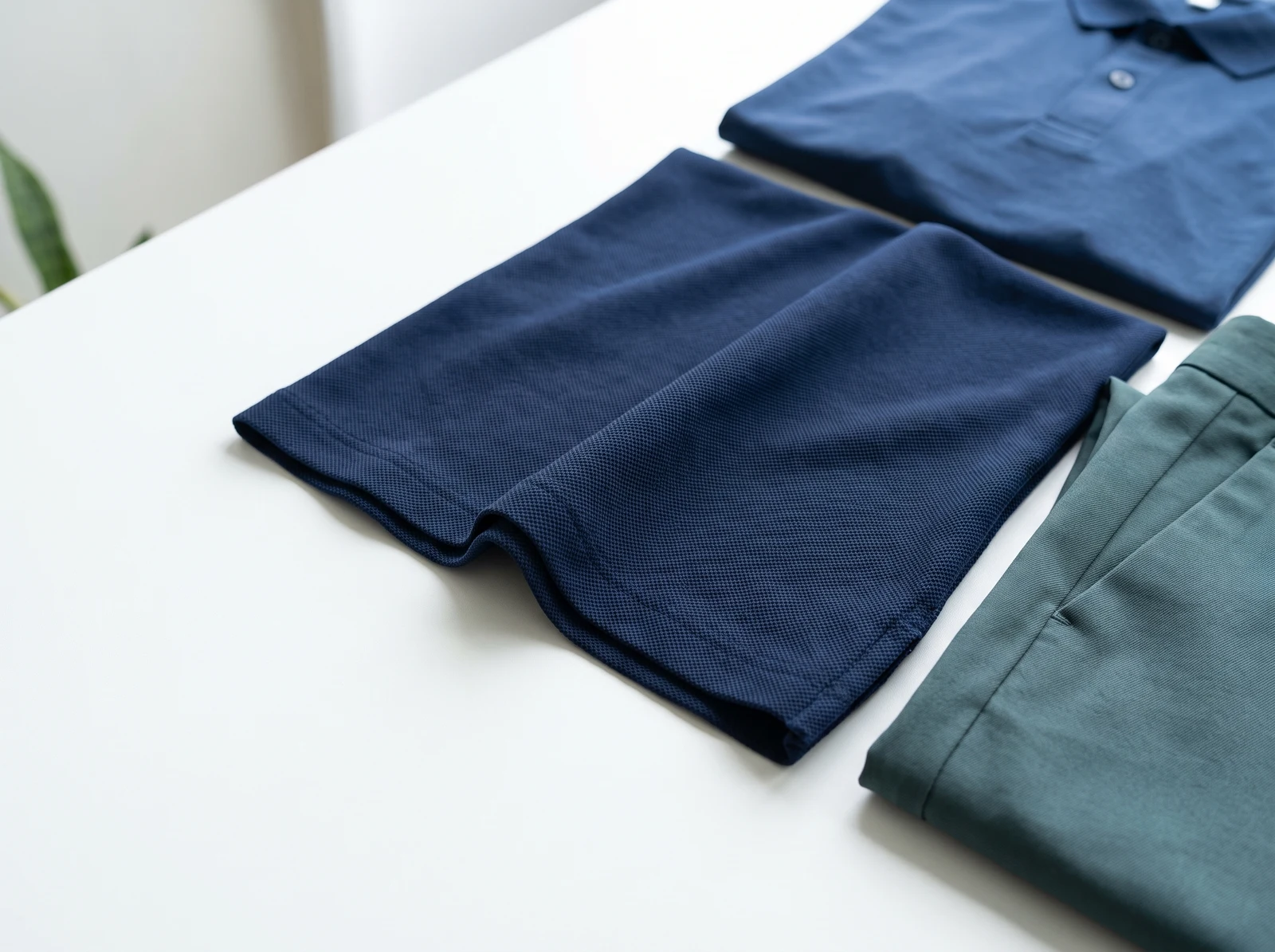
Pique knit
A raised, cellular texture with a recognizable polo appearance. It gives solid colors surface interest and suits classic club polos or a more structured visual direction.
What to check
Compare cell size, softness and drape. Fine artwork can lose definition across the textured surface; embroidery and printed details need a trial. Pique is not automatically more breathable than another knit.
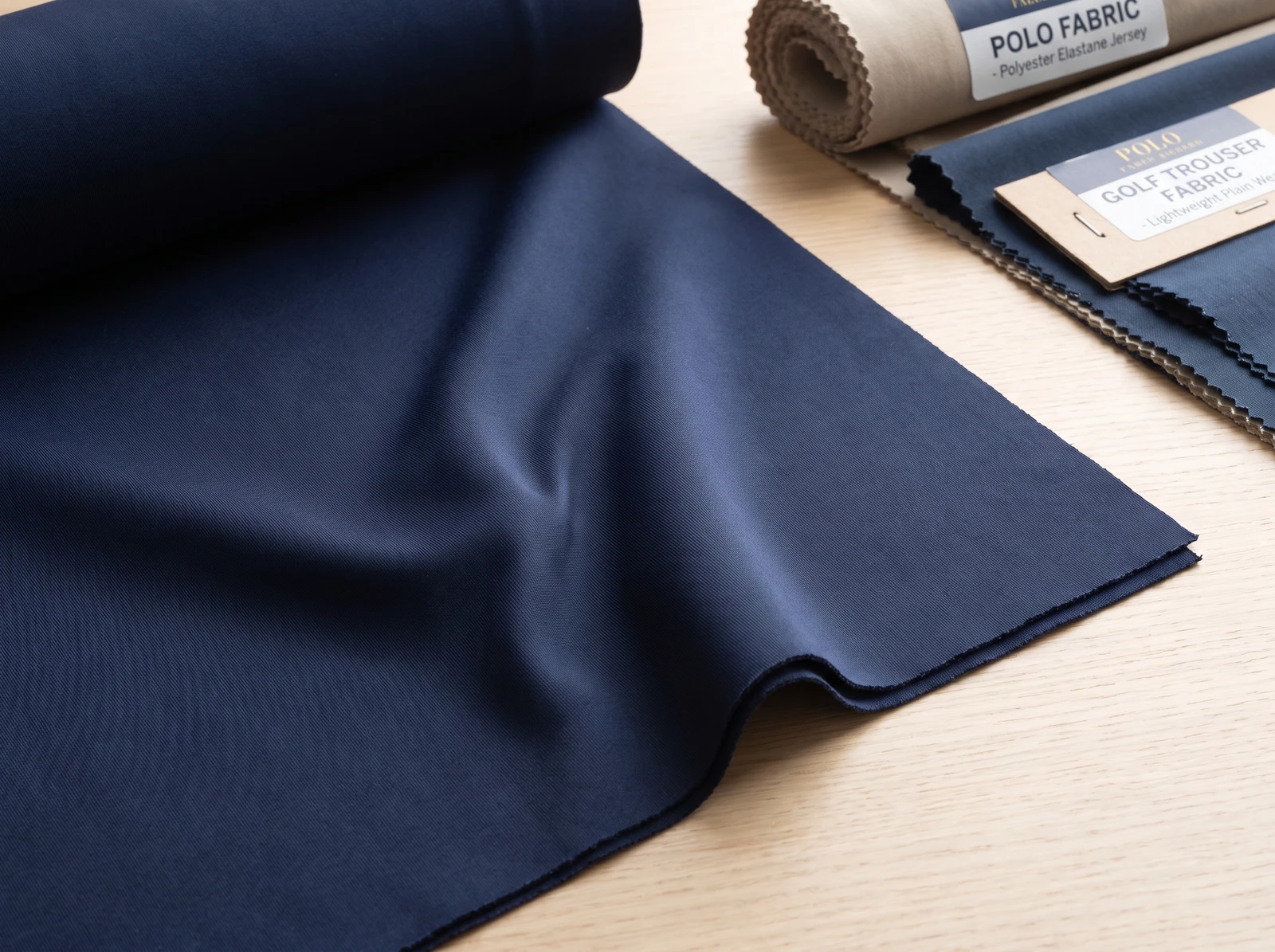
Plain / single jersey knit
A smooth-faced knit with fine loops and a different reverse side. A useful starting point for fluid drape, clean solid colors and detailed repeat prints. This is plain knitting, not woven plain weave.
What to check
Consider it for contemporary polos, golf dresses and lightweight tops. Check opacity in pale colors, recovery and dimensional stability; these depend on the actual yarn, weight and finish.
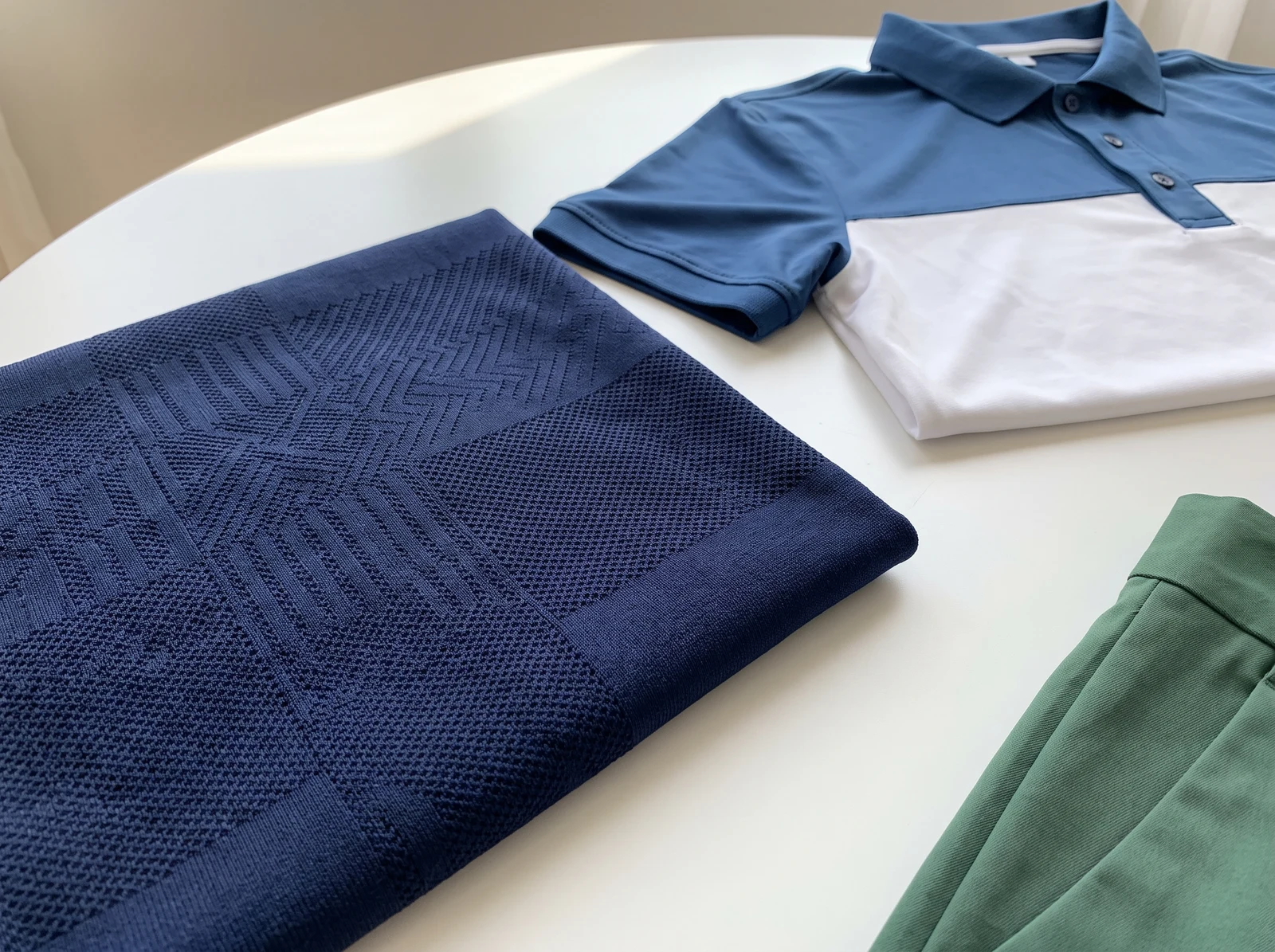
Jacquard knit
A pattern created within the knitting, rather than printed onto the surface. Tonal diamonds, geometric textures and other knitted-in designs add depth without an all-over ink pattern.
What to check
Consider it for understated premium polos or textured panels. Yarn choice and construction affect weight, drape and openness. Custom patterns may involve development minimums; review snagging and logo visibility on a swatch.
Woven fabrics for trousers, shorts and shells.
Woven fabrics interlace warp and weft yarns rather than forming knit loops. Plain weave, twill and ripstop offer different visual structures; yarn, fiber blend, density and finishing determine how the actual fabric moves and wears.
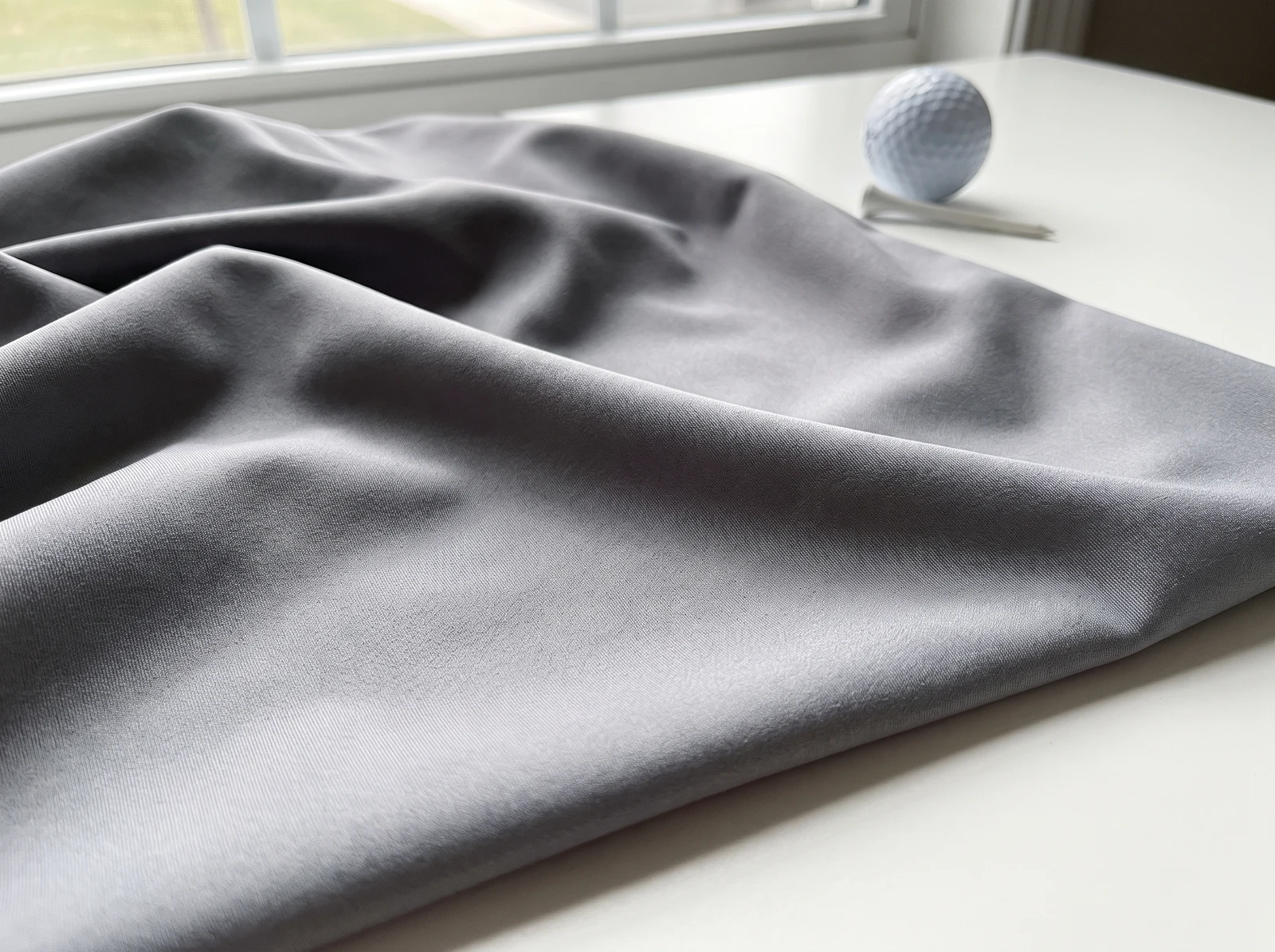
Plain-weave stretch fabrics
A fine, relatively flat woven face for a clean trouser or short. Consider polyester / elastane or nylon / elastane for an athletic silhouette; movement can also come from suitable mechanically stretchy yarns or construction.
What to check
Compare stretch direction, recovery, opacity, pocket stability and seam behavior. Some lighter plain-weave fabrics suit windbreakers, but trouser and shell specifications should be selected separately.
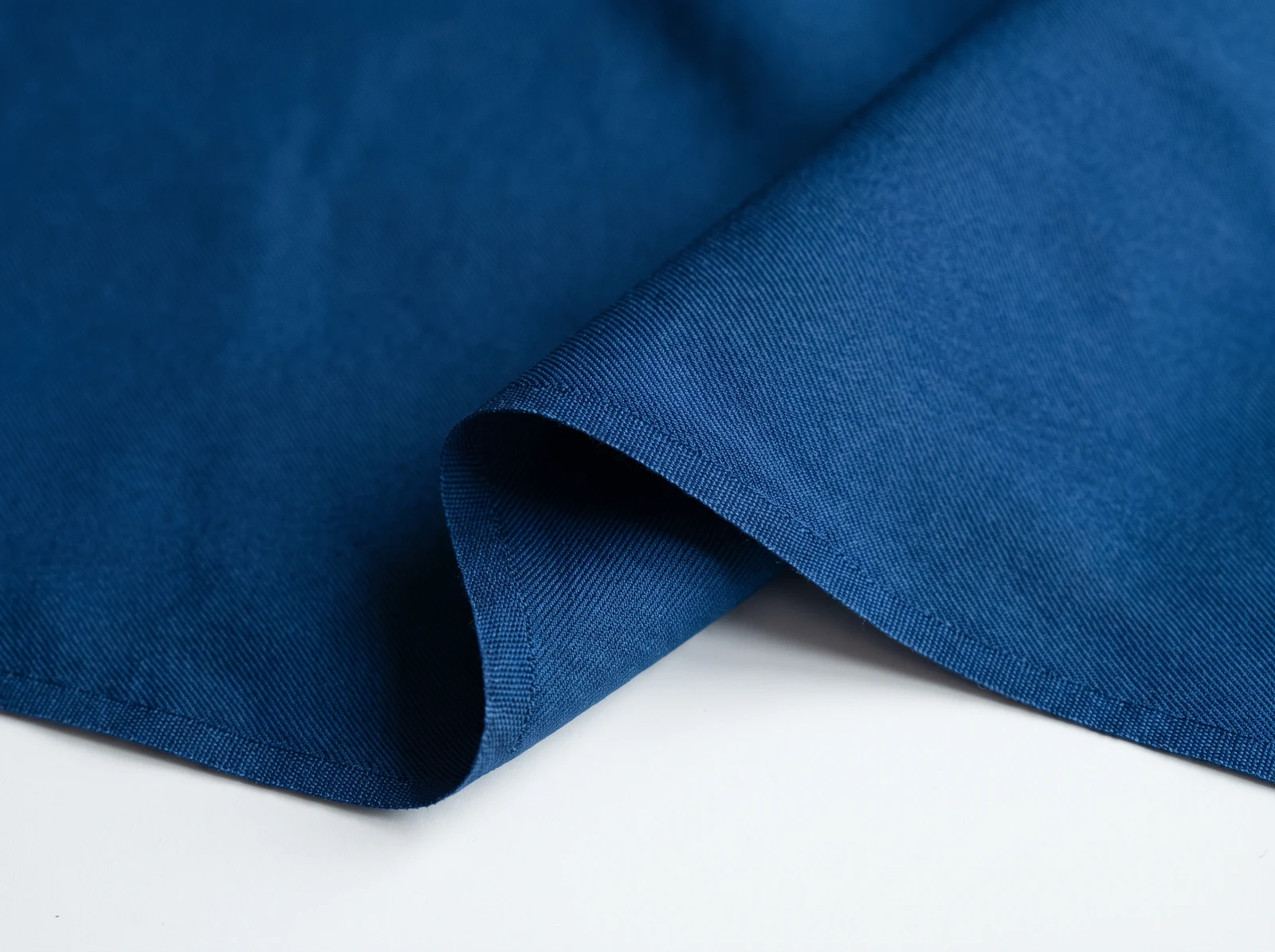
Twill & stretch twill
Diagonal weave lines create a recognizable chino appearance. Consider cotton / elastane, cotton / polyester, polyester blends or nylon blends when the brief calls for a more structured, tailored golf trouser or short.
What to check
Choose the weight and drape for the season. Check stretch, recovery, shrinkage, abrasion and seam strength on the selected material; a twill weave alone does not establish those results.
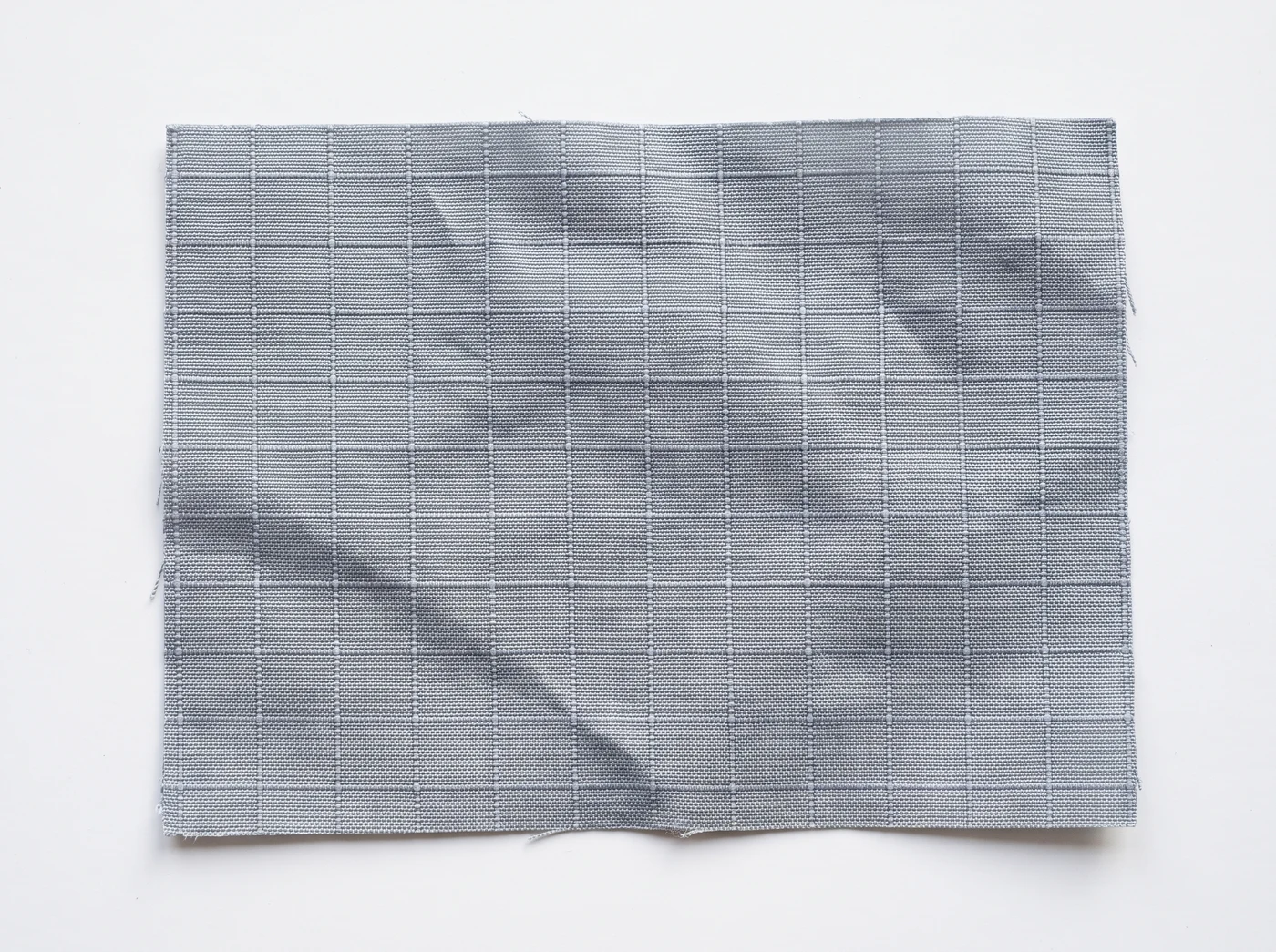
Lightweight ripstop
A woven construction with spaced reinforcement yarns that form a visible grid. A candidate for lightweight outerwear or technical shorts when a utility texture suits the range. Polyester and nylon versions have different handfeel and finishing options.
What to check
The grid is intended to help limit tear propagation, not make the fabric tear-proof. Confirm tear and abrasion requirements, stretch where needed, and any coating or weather finish. Ripstop alone is not waterproof.
Match outerwear to the level of protection.
A woven face, water-repellent finish and waterproof barrier are different parts of the material specification. Choose for wind, brief showers or sustained rain, then review the complete garment. Softshell describes a fabric or garment approach, not a guaranteed waterproof rating.
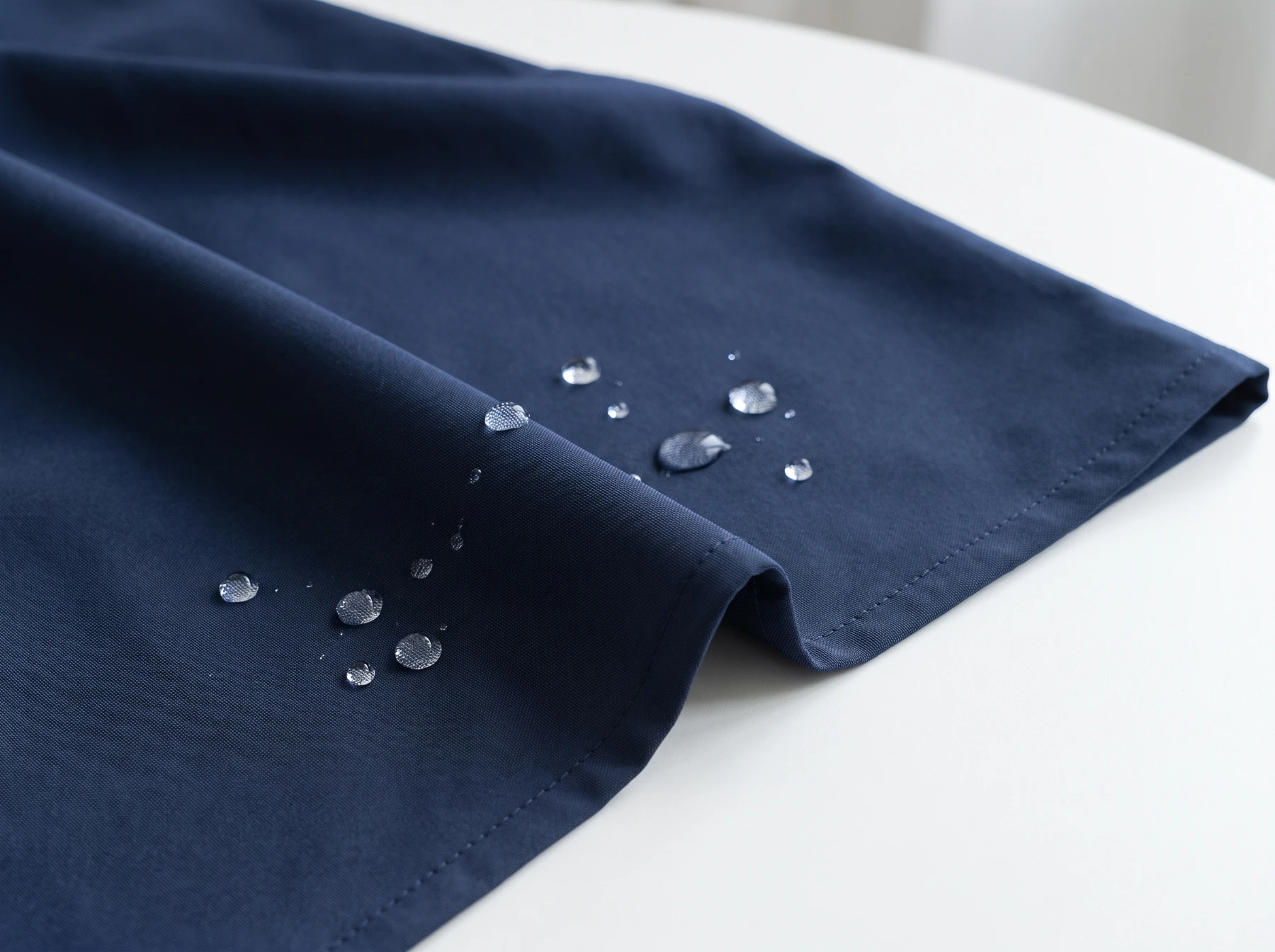
Water-repellent woven shells
A durable water-repellent (DWR) finish encourages droplets to bead on the outer surface. Consider it for lightweight golf windbreakers or selected trouser fabrics when surface wetting is a concern.
What to check
Beading does not prove waterproofness. Approve resistance to water penetration separately where needed, and review repellency after the agreed washing and care cycle. Confirm the finish chemistry and destination-market requirements.
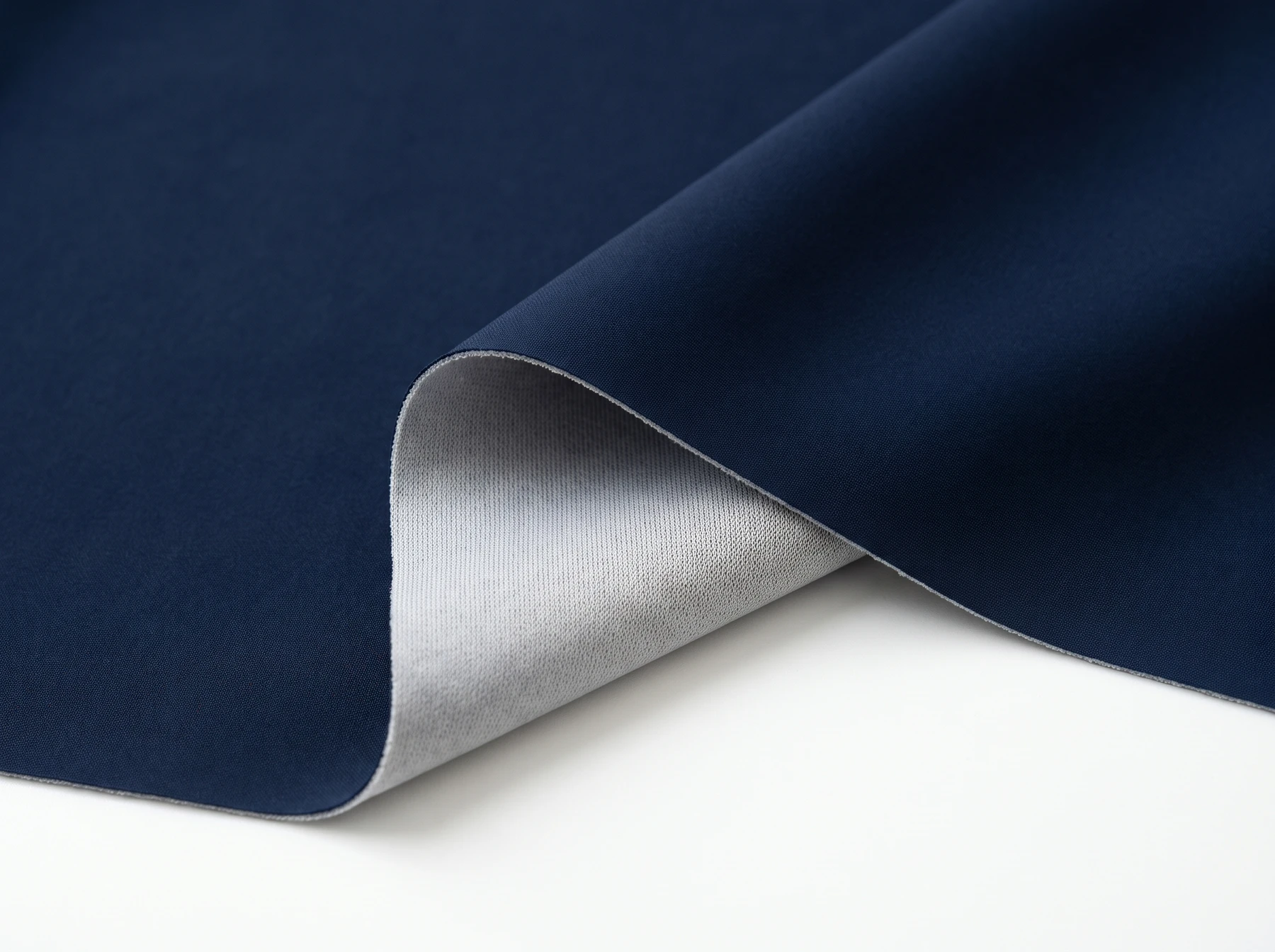
Softshell & bonded fabrics
Compare a supple stretch woven face with a selected backing, such as a light textile or brushed inner surface. This can suit cooler-weather golf jackets and trousers when movement and handfeel matter; a fleece-backed option adds bulk and warmth.
What to check
Some softshells include a membrane, while others do not. Review wind resistance, vapor transfer, weight and care for the actual construction. Bonding or a brushed backing does not automatically make a garment waterproof.
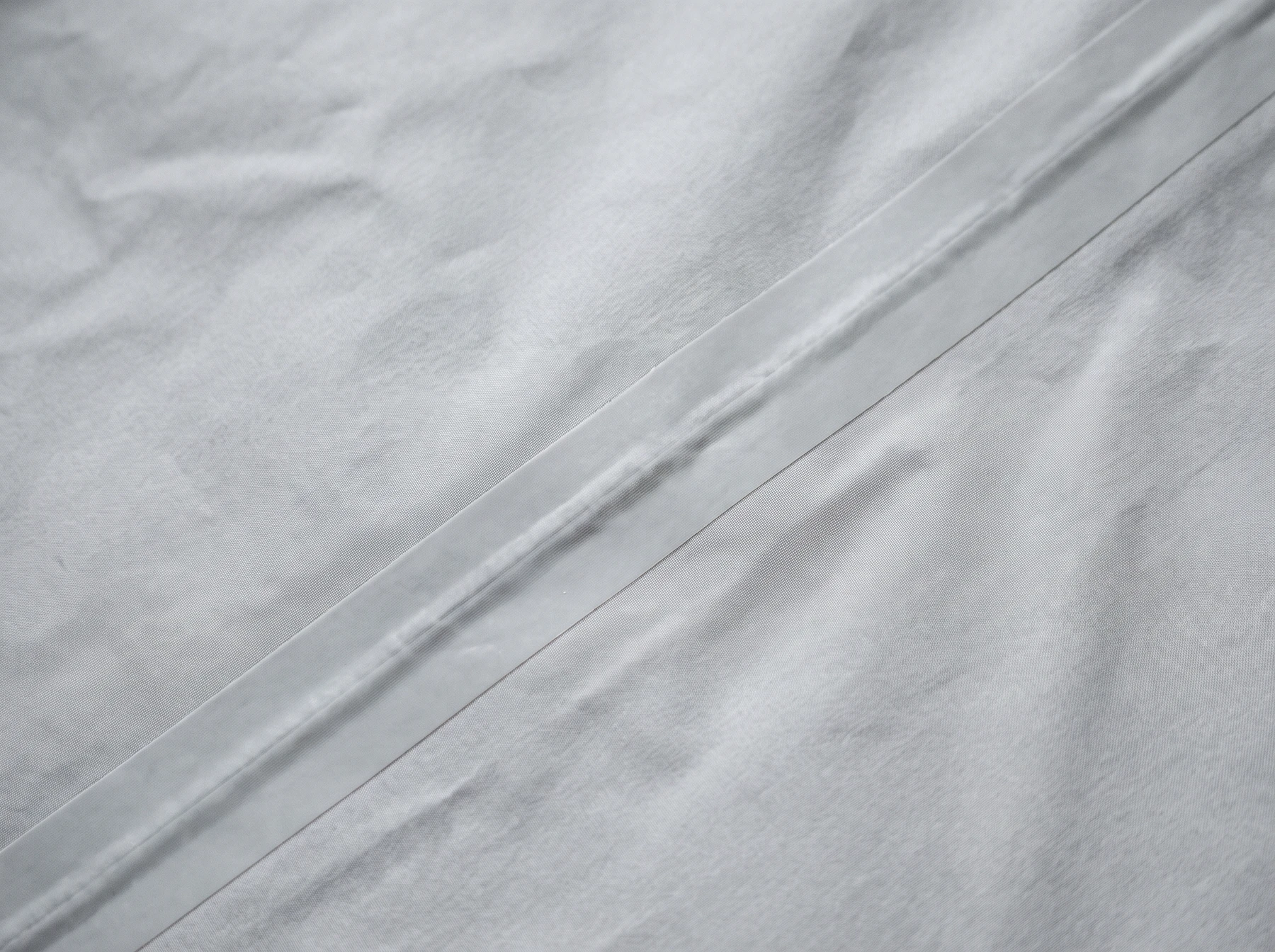
Coated & membrane-laminated fabrics
A coating or bonded membrane can provide a barrier against water penetration. For rainwear briefs, compare suitable 2-layer, 2.5-layer or 3-layer constructions by handfeel, weight, backing and protection requirements. More layers do not automatically establish better performance.
What to check
Approve waterproofness and moisture-vapor performance using named test methods. A waterproof fabric does not by itself make a waterproof jacket: seam sealing, zippers, openings and overall construction must be reviewed for the project.
Define the rainwear specification before production.
Describe the intended conditions and any claims you need to make. Material selection and garment feasibility are reviewed together; existing reports apply only to the documented fabric or product.
Water penetration
Agree the hydrostatic-pressure test method, target result and any conditioning or washing before testing. A surface spray or beading photograph cannot establish resistance to water penetration.
Moisture-vapor performance
Specify the method and conditions for moisture-vapor transmission or evaporative resistance. Results from different methods are not directly interchangeable. Air permeability is a different measurement.
Seams, zippers & openings
For a waterproof garment brief, agree the sealing scope, tape compatibility, closures, pocket construction and garment-level checks. Confirm construction feasibility, costs and the approval sample before committing to production.
Care & durability
Review repellency, coating or laminate integrity and seam-seal adhesion after the agreed care cycle. Confirm care labels and market-specific chemical requirements for the selected materials.
Choose the fibers for the way it will be worn.
Construction and composition are separate choices in both knitted and woven fabrics. These six common fiber families can be sourced to suit different garment briefs; exact blends and available constructions are confirmed during sourcing. Elastane and spandex are two names for the same elastic fiber.
A starting point for your brief
For performance polos, clients most often choose polyester / elastane.
A practical first swatch for a performance golf polo: polyester provides a low-absorbency base, while elastane adds stretch and recovery for movement. Choose smooth jersey for clear repeat artwork or fine pique for a textured solid polo.
We recommend comparing both in your preferred weight and handfeel. The blend percentage, stretch direction, moisture management and print response still need approval on the actual fabric. It is a starting point, not a single fixed specification.
Compare six composition families
| Composition | Why consider it | Garment & visual direction | What to check |
|---|---|---|---|
| Polyester / elastane | A low-absorbency synthetic base with added stretch and recovery. A versatile option when swing comfort and a closer fit matter. | Performance knit polos and dresses; selected stretch woven trousers or shorts. Smooth polyester-rich jersey is a useful candidate for detailed sublimation prints, subject to a trial. | Confirm blend ratio, stretch direction, recovery and heat compatibility. Wicking, drying speed and UPF are separate requirements, not automatic properties of the blend. |
| Polyester | Low fiber moisture absorption and generally practical care. Knitting or textured yarns may provide stretch even without elastane, but the result varies. | Knit polos and print-led tops, or selected woven shorts and lightweight shells. Construction and finishing determine the result; a polyester base alone does not establish weather protection. | Compare handfeel, drape, movement and pilling. Check print response and moisture transport on the selected fabric; polyester content alone does not prove them. |
| Nylon / elastane | Often selected for a smooth, soft touch with stretch and recovery. Nylon is also called polyamide; yarn and finishing determine the final sheen and feel. | Soft-touch knit tops and dresses, plus selected stretch woven trousers, shorts and jackets. Choose the construction to match the silhouette and required movement. | Nylon absorbs more moisture than polyester at the fiber level. Review drying and pilling on the actual fabric. Do not assume a polyester sublimation process is suitable; approve dyeing, printing and transfer temperatures separately. |
| Cotton | A natural, absorbent fiber with a familiar soft touch. A useful choice when casual comfort and a traditional polo handfeel take priority. | Classic cotton pique polos and jersey lifestyle tops; woven twills for a traditional chino or short. The garment category needs its own weight and fit specification. | Untreated cotton can retain moisture and dry more slowly than suitable performance synthetics. Review shrinkage, twisting and care. Conventional polyester dye sublimation is not the same process as printing on cotton. |
| Cotton / polyester | Balances cotton's familiar touch with polyester's lower moisture absorption. Feel and care behavior change with the ratio, yarn and finishing. | Club polos and everyday knit tops, or selected woven trousers and shorts. The ratio and construction change how cotton-like or structured the surface appears. | Compare shrinkage, pilling and drying rather than assuming a fixed result. Sublimation colors depend on the polyester portion; approve the intended print method and wash appearance. |
| Cotton / elastane | Combines a cotton handfeel with added stretch and recovery. A useful alternative when the brief calls for natural-fiber comfort with a more fitted silhouette. | Fitted knit polos and cotton-rich dresses, or stretch woven chinos and shorts. Pique, jersey and twill create different surfaces and silhouettes. | Check recovery, shrinkage and opacity under stretch. Elastane does not make cotton quick-drying or guarantee four-way stretch; confirm print method and appropriate care. |
Material approval checklist
| Decision | What to compare | What to confirm |
|---|---|---|
| Fiber composition | Compare fiber types and their proportions, together with handfeel, care requirements and the intended print process. Polyester-based fabrics may be considered for sublimation; compatibility must be checked for the selected blend. | Confirm the supplier's composition specification and care guidance. Request the relevant supporting documents where needed; no fixed blend is assumed for a custom order. |
| Weight & opacity | Compare fabric weight in grams per square meter (GSM), drape and opacity in the intended garment color. A lighter fabric is not automatically cooler, and a heavier fabric is not automatically more durable. | Agree the GSM specification and acceptable variation with the selected supplier. Inspect a physical swatch and sample, including opacity under stretch and normal lighting. |
| Fabric construction | Compare knit loops for polos and layers with woven plain, twill or ripstop structures for trousers, shorts and shells. Select a coating, membrane or backing separately where required. | Review the actual surface, drape, stability and application trials. Agree the construction and any protective layers in the supplier specification. |
| Stretch & recovery | Compare stretch direction and recovery on the actual material. Review shoulders and sleeves for tops; waist, seat and thighs for trousers and shorts; and layering ease and shoulder movement for outerwear. | Distinguish material stretch from garment ease. Agree the required recovery and test method where measured claims are needed, then check movement on a finished sample. |
| Print & logo compatibility | Match the artwork, repeat scale and color requirements to the fiber composition and surface. Sublimation, other print methods, embroidery and applied logos each need compatibility checks. | Approve print color, scale and placement on the actual material. Review logo adhesion or stitching, handfeel and relevant care testing before bulk production. |
| Functional performance | Specify the required moisture management, drying, breathability, UPF, odor control or other properties. These are material and test requirements; a fabric description or photograph cannot establish a tested result. | Confirm the relevant standard, result, sample identification and report scope. Available reports apply only to the documented material or product; arrange additional tests when required. |
Have a preferred composition, GSM or test requirement? Include it with your reference style and intended quantity so we can review suitable materials.
Discuss your fabric requirementsDevelop moisture-wicking requirements around the wearer.
For custom moisture wicking golf shirts, define the intended climate, activity and comfort needs first. Fiber blend, knit construction and finishing influence moisture transport and drying; polyester content alone does not establish performance. Compare physical swatches and the finished sample.
Moisture management, quick drying, breathability, stretch and wrinkle resistance are separate requirements. Agree named test methods and target results where quantified claims are needed. Reports apply to the documented material or product, including its conditioning and care cycle.
Complete the fabric specification with your artwork and finishing.
Continue building your specification.
Review the material, artwork and finishing together before sampling.