
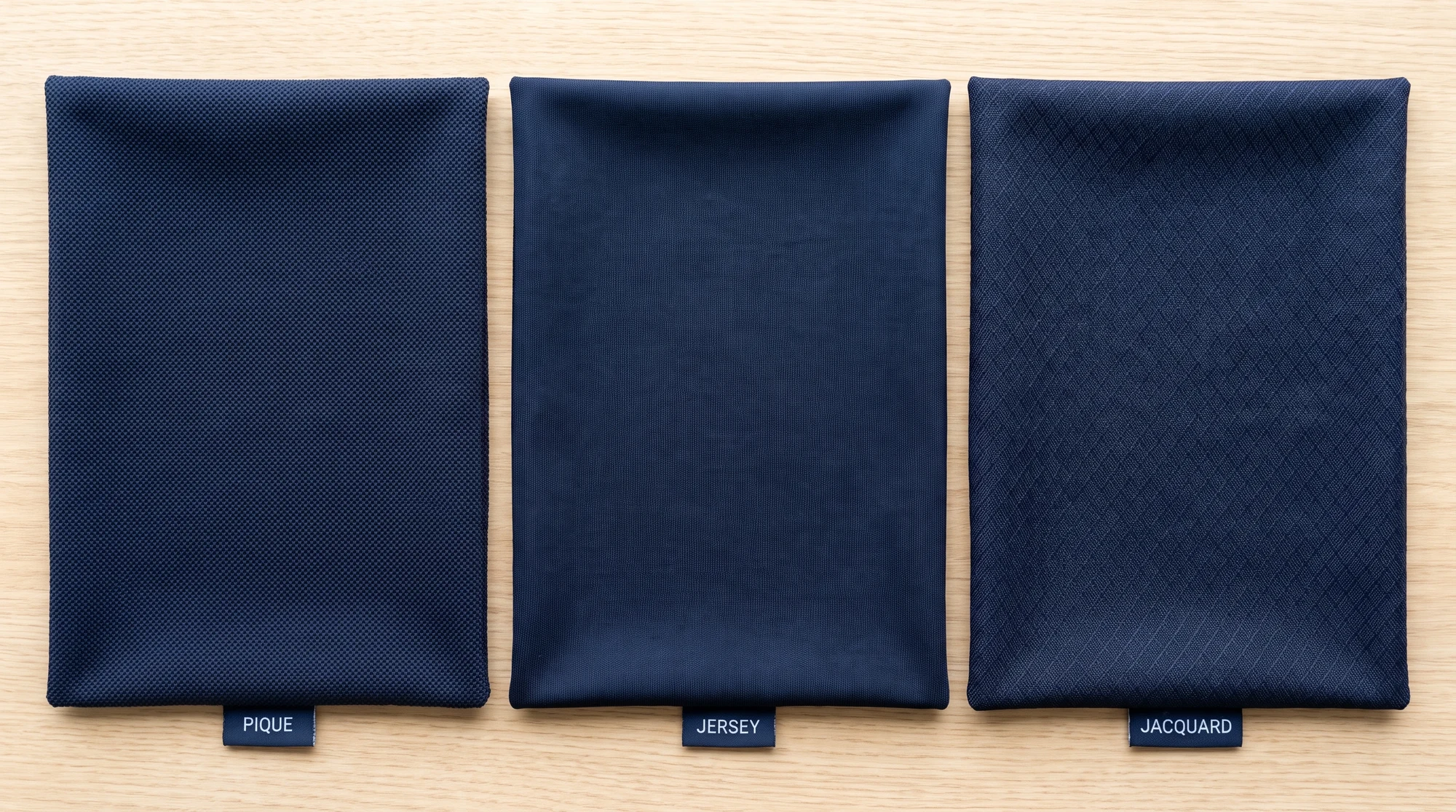
A golf polo fabric has two separate specifications: its construction and its fiber composition. Pique, plain single jersey and jacquard are knit structures. Polyester, nylon, cotton and their elastane blends describe the fibers. Review both before choosing weight, print process and functional finishes.
What is the difference between the three structures?
Pique has a raised, cellular surface associated with a classic polo. Plain single jersey has a smoother face with fine knit loops and a different reverse side. Jacquard creates a pattern through the knitting itself. A jacquard pattern is not simply a print applied to a smooth base.
Pique adds interest to a solid color. Smooth jersey is a useful starting point for fine repeat artwork and fluid drape. Tonal jacquard suits a restrained textured design. Their actual softness, opacity and breathability depend on the yarn, construction, weight and finishing, so none is universally the best golf fabric.
Why do many Ganyn clients choose polyester / elastane?
Polyester / elastane is the composition our clients most often select. Polyester has low moisture absorption at the fiber level; elastane adds stretch and recovery. Together, they are a practical starting point for performance polos and stretch tops. The actual blend and knitting determine the garment feel and movement.
For detailed prints, compare a smooth polyester-rich jersey. For a solid polo with texture, compare fine pique. A nylon / elastane option may suit a softer-touch solid; cotton and cotton blends may better match a traditional or lifestyle brief. Confirm exact composition and availability rather than assuming one standard blend.
Does polyester automatically wick sweat?
No. Low fiber absorption is different from moving liquid through a fabric. Moisture transport can be engineered through yarn shape, knit structure or finishing. Drying speed, air permeability and UPF are also different properties. Request evidence for the selected material and any claims you intend to make.
How should weight and stretch be approved?
GSM means grams per square meter. Compare the handfeel, drape and opacity of physical swatches, including pale colors under stretch. A lower GSM does not automatically mean a cooler garment. Review stretch direction and recovery as well as the amount of movement; elastane content alone does not guarantee four-way stretch.
Check the finished sample across the chest, shoulders and sleeves in the intended fit. Agree a material specification, acceptable variation and any relevant test methods before production.
How does the fabric affect printing and logos?
Conventional dye sublimation is normally considered for compatible polyester-based materials, with the base color and blend affecting the result. Cotton and nylon need their own material-appropriate process. Review color, motif scale and logo stitching or adhesion on the actual knit. A textured pique or jacquard can change the appearance of fine details.
What should the final material brief include?
Record the construction, fiber percentages, GSM, color, handfeel, stretch and recovery requirements, print method, finishes and care instructions. Connect the swatch reference to the approved garment sample. If the base material changes, reassess its fit, print response and documented performance.
Compare the six composition families in our fabric guide.
Explore the related manufacturing range.
Discuss your manufacturing project