
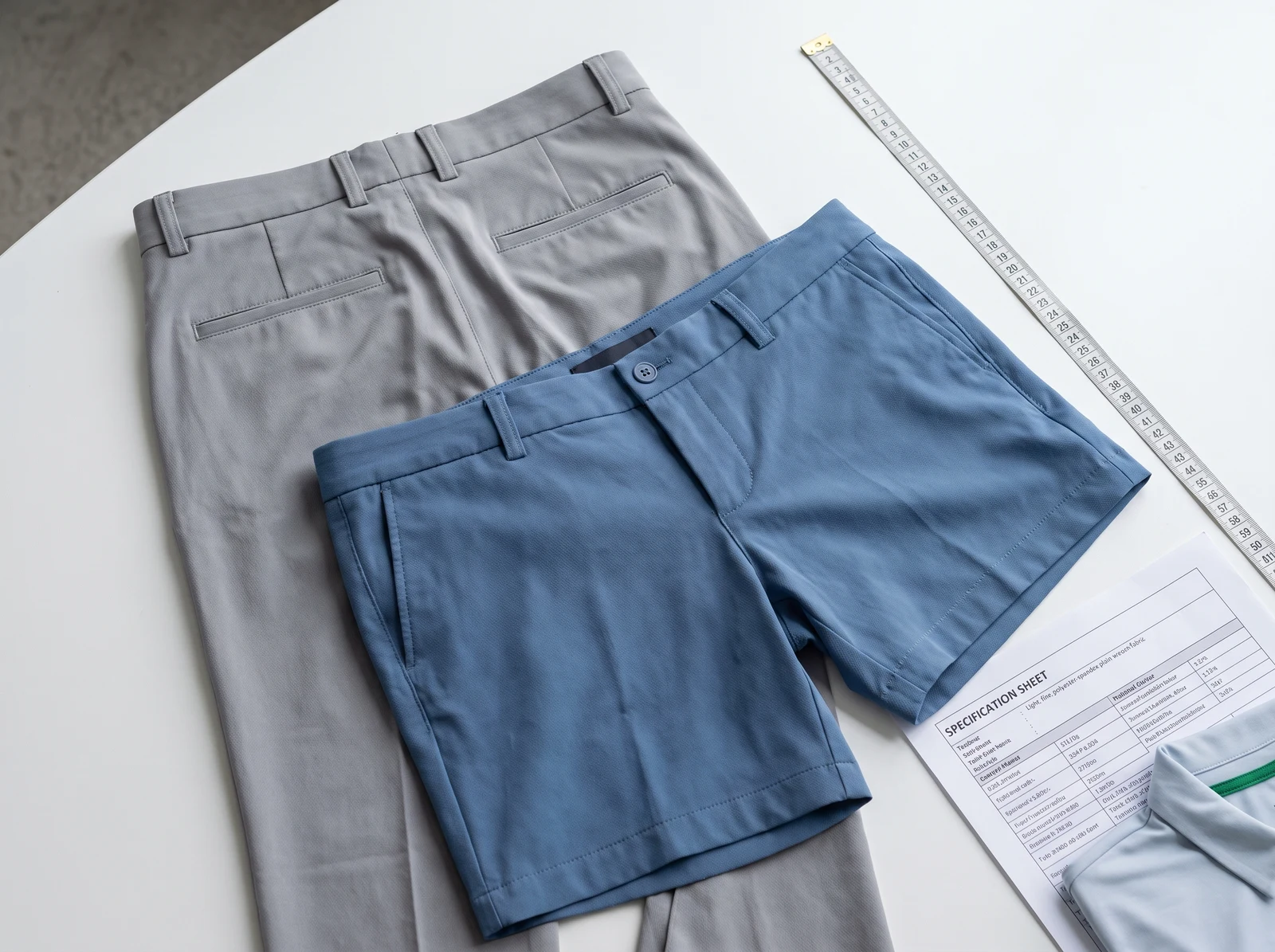
Develop custom golf trousers and shorts by specifying the fabric and finished garment together. A stretch woven can support movement, but comfort also depends on rise, waist construction, ease, pockets and leg shape. Ganyn Apparel reviews these decisions through an agreed specification and physical sample before bulk production.
Choose a woven fabric for the intended use
Compare plain weave for a relatively clean surface, twill for diagonal texture and a more chino-like appearance, or ripstop when a visible reinforcement grid suits the collection. Polyester / elastane, nylon / elastane and cotton-rich stretch blends are different sourcing directions; composition alone does not determine stretch, drying or durability.
Describe the season, desired handfeel, drape and opacity. Agree fabric weight, stretch direction, recovery and relevant care requirements. Ask for a physical swatch rather than selecting performance from a photograph.
Specify waist, rise and leg shape
Define whether the brief calls for a tailored, athletic or relaxed fit. Record waist and hip measurements, front and back rise, inseam and leg opening using agreed measurement points and tolerances. For shorts, agree finished length and the intended position of the hem.
Use finished garment measurements separately from body measurements. Review the size grading and how the range will be approved; a single sample size does not verify all sizes. Men's and women's fits may need separate patterns and approvals.
Review movement on the finished sample
Check sitting, walking, bending and a golf stance. Review tension across the seat and thighs, waistband comfort and recovery after movement. Added elastane does not compensate for an unsuitable pattern or automatically guarantee four-way stretch.
Evaluate pocket behavior with the garment worn. Confirm the intended ease rather than increasing all measurements to resolve one fit issue.
Confirm pockets, waistband and closures
Specify belt loops, waistband structure, fly or other closure, pocket openings, pocket bags and any secure-storage details. Review reinforcement, seam finishing and the stability of pocket edges. Agree whether trims, elastic or contrast panels are part of the design.
For branding, define logo size and position from a fixed seam or garment reference. Check embroidery or applied graphics on the selected woven; ensure the process suits the material and required care.
Match functional claims to the selected material
Moisture management, quick drying, abrasion resistance and water repellency are separate requirements. Request the applicable evidence or agree additional tests where needed. A DWR surface finish is not a waterproof garment claim, and a weave name alone does not establish a test result.
Approve one complete production reference
Consolidate material, measurements, construction, color, logos, labels and packing in the final specification. Identify changes that require another sample and confirm costs and schedule before production. Starting garment MOQ is 50 pieces per style and color; custom materials and trims can have separate minimums. Sampling typically takes 3–15 days, with bulk production typically 7–20 days after approval and material readiness; the order schedule and freight time are confirmed separately.
Compare woven materials for trousers and shorts.
Explore trouser development references.
Explore the related manufacturing range.
Discuss your manufacturing project